

Reply to a Pollution Board Notice
Show-cause, closure or direction from the board? The reply decides most of these cases, and the time you get is usually short.
Read moreGot a notice from the pollution board, a closure order, or a factory next door that won't stop polluting? Environmental cases have short deadlines, and some can't be extended. Send us the notice, the order or a few photos, and we'll tell you plainly where you stand, which authority or NGT bench deals with it, and what has to happen next.
Your matter is led by
Pollution board notices and consents, environmental clearance, waste and EPR rules, and cases before the National Green Tribunal. We act for factories, builders, hospitals and businesses, and for residents and RWAs living with pollution. Most of our work is in Delhi NCR, before DPCC, UPPCB, HSPCB, CAQM and the NGT Principal Bench, and we take matters at the other NGT benches too.
Browse all servicesShow-cause, closure or direction from the board? The reply decides most of these cases, and the time you get is usually short.
Read moreWhen the board has closed the unit or asked for electricity and water to be cut, we work on getting the order revoked and, if needed, appeal it.
Read moreAny unit that discharges effluent or emissions needs it. We handle new applications, renewals and the queries that hold them up.
Read moreNeeded before you build or expand a factory or project. Building without it is one of the commonest violations we come across.
Read moreProjects listed in the EIA Notification, 2006 need clearance before work starts, and the conditions keep applying after it is granted.
Read moreApplications within six months, appeals within 30 days of an order, and compensation claims, at every bench of the National Green Tribunal.
Read moreAsked to pay for past violations? The amount, the period counted and the way it was worked out can often be questioned.
Read moreA factory, STP or building site is polluting your area. We help you complain to the right office and keep after it until something happens.
Read moreSociety STP not working or sewage overflowing? The builder, the RWA and the maintenance agency each carry a different share of it.
Read moreBuilding beyond the clearance, no STP, trees cut or dust everywhere. What buyers, RWAs and neighbours can do about it.
Read moreBorewells and dewatering for factories, buildings and projects usually need permission from CGWA or the state authority.
Read moreProducers, importers and brand owners must register on the CPCB portal and meet targets every year.
Read moreGenerating, storing or recycling hazardous waste needs authorisation, proper records and vendors who are allowed to take it.
Read moreSite stopped or unit shut under GRAP? What each stage allows, and how to deal with CAQM directions.
Read moreUsing forest land for a project needs central approval, compensatory afforestation and, in many areas, gram sabha consent.
Read moreMany violations now lead to money penalties decided by an adjudicating officer. We prepare the reply and argue the hearing.
Read moreConsent refused or cancelled, or a direction passed against you? Appeals have short time limits, often 30 days.
Read moreCrops, wells, homes or health harmed by pollution. A claim before the NGT can be filed within five years.
Read moreA legal look at your consents, authorisations and returns, so gaps are found by you and not by an inspector.
Read moreBefore you buy, lease or lend against a plant or project, check its approvals, notices and pending cases.
Read more



















































Environmental Lawyers is the environmental and NGT practice of Advocate BK Singh & Associates. We act for industries, builders, hospitals and businesses dealing with pollution boards and environment authorities, and for residents, RWAs and farmers who want pollution stopped. We appear before the regulators, the NGT, the High Courts and the Supreme Court.
Most notices turn on a few documents: the consent, the inspection report, the test results and what has been fixed since. We answer each point with proof, so the board has a reason to drop or soften the action.
The reply date in the notice, 30 days to appeal a board order or a clearance, six months to bring most NGT applications. On day one we write down the dates that can't be missed.
Often the quickest way out is to fix the problem and show it: repair the ETP, file the missing return, renew the consent. When that will get you further than a fight, we'll tell you so.

A show-cause, closure or compensation notice has arrived. The reply is usually due within days, so send it to us now.
Notice repliesConsent to establish or operate, environmental clearance, a groundwater NOC or EPR registration, applied for in the right order.
ConsentsBook a confidential call. Keep the notice, the order or a few photos handy, and you'll leave knowing your options, the deadlines and roughly what each route involves.
Book a callThe people who call us run factories, hospitals, warehouses and building projects, or live next to a unit, STP or building site that won't stop polluting. We work from offices in Dwarka and Vaishali and appear before the pollution boards, CAQM, the NGT and the courts.
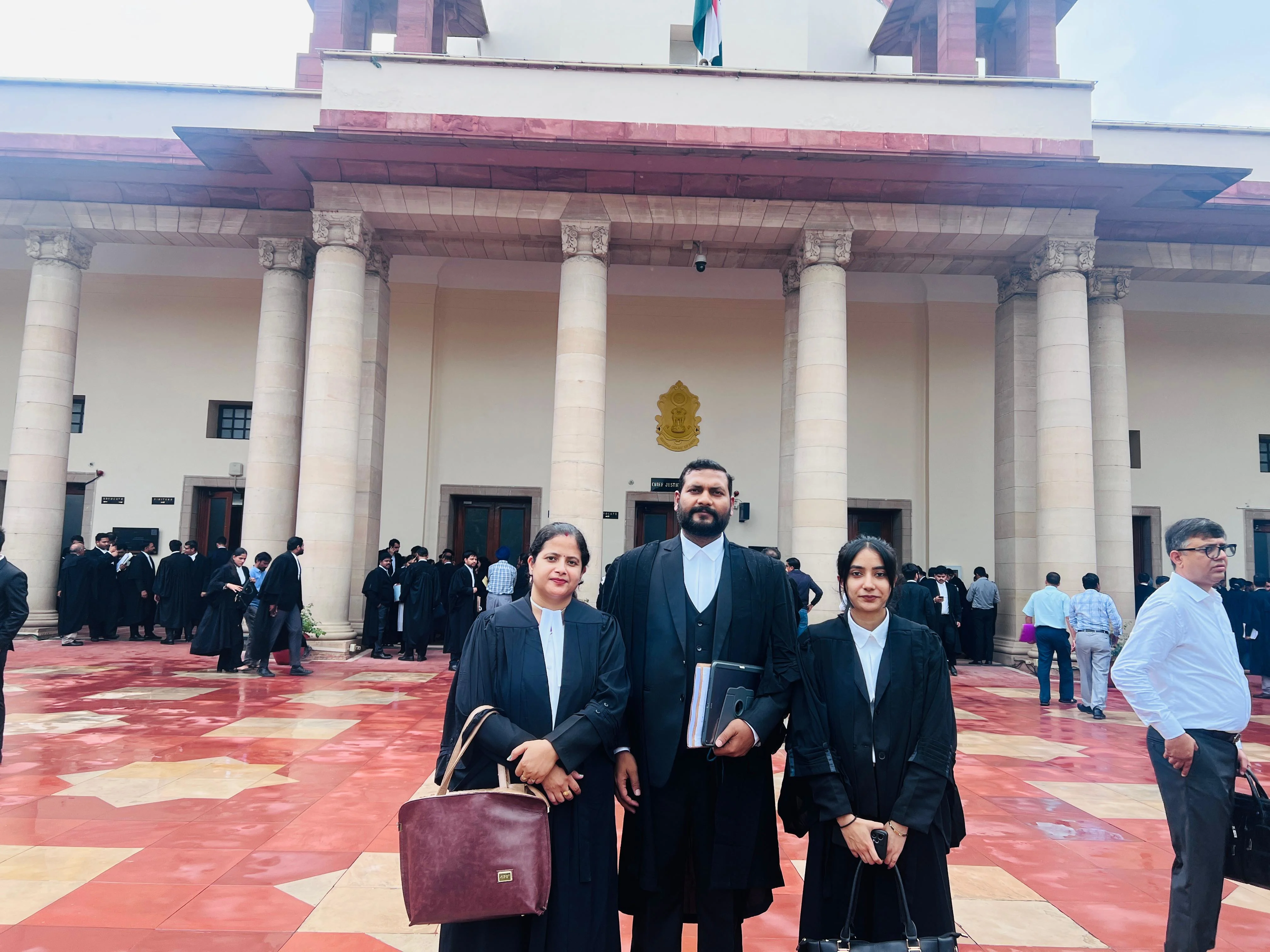

Reviews shared on Google by people we have worked with. Every case depends on its own facts.
Testimonial

Plain-English guides on consents, environmental clearance, EPR, GRAP and the NGT: what each rule asks of you, and what to do when a notice arrives.
Last reviewed: November 2026 The honest answer comes first. Nobody can tell you who the best NGT lawyer in India is, and a lawyer who calls himself that is breaking Bar...
Read articleLast reviewed: November 2026 An environment law firm deals with one basic conflict. Someone wants to build, make or dispose of something, and someone else, or the land...
Read articleEnvironmental Clearance in India: Legal Process, Requirements and Remedies When it comes to Environmental Clearance in India, it plays an important role in the legal...
Read articleFrom getting consent and clearance to replying to a notice and taking a case to the NGT.
Short answers. Your own facts can change the answer, so treat these as a starting point.
Tell us where things stand: a notice, an order, a deadline or a polluting neighbour. An advocate will call you back.
Chat on WhatsApp Call +91 96259 61599The National Green Tribunal hears cases that raise a substantial question about the environment under seven laws: the Water Act, the Water Cess Act, the forest conservation law, the Air Act, the Environment (Protection) Act, the Public Liability Insurance Act and the Biological Diversity Act. Appeals from the NGT go to the Supreme Court within 90 days.
Read exactly what it alleges and note the reply date. Fix whatever can be fixed quickly, then reply point by point with evidence and ask for a hearing and a fresh inspection. If you ignore the notice, the board can pass an order without hearing your side.
Usually, yes. The board can revoke a closure direction once you show the problem has been fixed, normally after inspecting the unit again. If the order itself is wrong, it can be appealed to the NGT within 30 days, which the Tribunal can extend by up to 60 days.
Consent to Establish is needed before you build or expand a unit. Consent to Operate is needed before you start running it, and it has to be renewed. Both come from the State Pollution Control Board, or the Pollution Control Committee in a union territory.
Under the EIA Notification, 2006, building and construction projects with a built-up area of 20,000 sq m or more need clearance before work starts, usually from the State Environment Impact Assessment Authority. Larger townships fall in a separate category.
Six months from when the problem first arose for an application under Section 14 of the NGT Act, 30 days from the order for an appeal under Section 16, and five years for a compensation claim under Section 15. The Tribunal can allow up to 60 more days if there is good reason for the delay.
Yes. Complain in writing to the regional office of the State Pollution Control Board, with dated photos or videos, and keep the acknowledgement. In Delhi NCR you can also approach the Commission for Air Quality Management. If nothing happens, you can apply to the NGT.
It depends on the state where the problem arose. Delhi, Uttar Pradesh, Haryana, Punjab and the other northern states and union territories go to the Principal Bench in New Delhi. The zonal benches sit at Bhopal, Pune, Kolkata and Chennai.
